Bring your ideas to life with precision 3D printing, without the cost of tooling.
Our 3D printing services provide fast, accurate and cost-effective solutions for prototyping and low-volume production. Using advanced FDM and SLA technologies in our UK facility, we help businesses turn designs into functional parts without the need for tooling. Whether you need a one-off prototype, a small batch of components, or complex geometries that traditional manufacturing can’t achieve, LBFG delivers quality results with speed and flexibility.
Why choose LBFG for your 3D printing?
Our 3D printing processes
Fused Deposition Modelling (FDM)
FDM is a versatile and affordable 3D printing method that works by extruding melted thermoplastic filament layer by layer to create a part. It is excellent for producing functional prototypes, jigs, fixtures, and end-use components that require mechanical strength and/or durability.
We offer a wide choice of materials, including PLA, ABS, PETG, ASA, and engineering-grade polymers, giving you flexibility depending on your project’s needs. FDM parts are well suited for applications where strength and function matter more than surface finish. They can be post processed with sanding, machining, coating, or adding threaded inserts as required.
Key benefits of FM 3D printing:
Stereolithography (SLA)
SLA is a high-precision process that uses UV light to cure liquid resin layer by layer, creating parts with extremely fine details and smooth surface finishes. This makes it ideal for applications where aesthetics and accuracy are critical – such as cosmetic prototypes, housings, medical models, and detailled engineering components.
We offer a range of resins with different properties, front standard resin for visual models to engineering resins that mimic ABS, polypropylene, or have temperature resistance of up to 240°C. SLA parts are often used when tight tolerances and complex geometries are required, or when a product needs to look production-ready for investors, customers, or marketing.
Key benefits of SLA 3D printing
Selective Laser Sintering (SLS)
SLS is a powerful additive manufacturing process that uses a high-powered laser to fuse fine particles of thermoplastic powder, layer by layer, into solid, functional parts. This technology is renowned for its ability to produce complex geometries and durable components without the need for support structures, as the unsintered powder acts as natural support during printing.
We offer a range of high-performance materials, including Polyamide 12 (Nylon 12), Polyamide 11 (Nylon 11), and glass-filled nylon, providing excellent mechanical properties, chemical resistance, and thermal stability. SLS is ideal for functional prototypes, end-use parts, and applications requiring high strength, durability, and design freedom, such as automotive components, aerospace parts, and custom tooling.
Key benefits of SLS 3D printing
Selective Laser Melting (SLM)
SLM is an advanced metal 3D printing technology that fully melts fine metal powder using a high-power laser, building up complex, high-performance metal parts directly from digital designs. This process is ideal for industries requiring superior material properties, such as aerospace, medical, and automotive, where parts must withstand extreme conditions.
We offer a variety of metals, including stainless steel, aluminium alloy, titanium alloy, and tool steel, delivering parts with exceptional strength, density (>99%), and resistance to heat, corrosion, and wear. SLM is perfect for producting lightweight structures, intricate geometries, and customised components such as orthopedic implants, aerospace brackets, and high-temperature tooling.
Key benefits of SLM 3D printing
Multi Jet Fusion (MJF)
MJF is a cutting-edge powder-based 3D printing process that uses an inkjet array to deposit fusing and detailing agents onto a bed of thermoplastic powder, which is then fused together using heat. This technology is known for its speed, precision, and ability to produce production-grade parts with consistent mechanical properties and fine detail.
We offer a range of materials, primarily Nylon PA12 and PA11, as well as glass-filled options, providing excellent chemical resistance, durability, and versatility. MJF is ideal for prototyping, functional testing, and end-use production, especially for applications requiring high throughput, such as consumer goods, automotive components, and industrial tooling.
Key benefits of MJF 3D printing
When 3D printing makes more sense than injection moulding
Not every project requires injection moulding, especially at low volumes. Here are the stories of a few of our customers and how their product was produced with 3D printing processes.
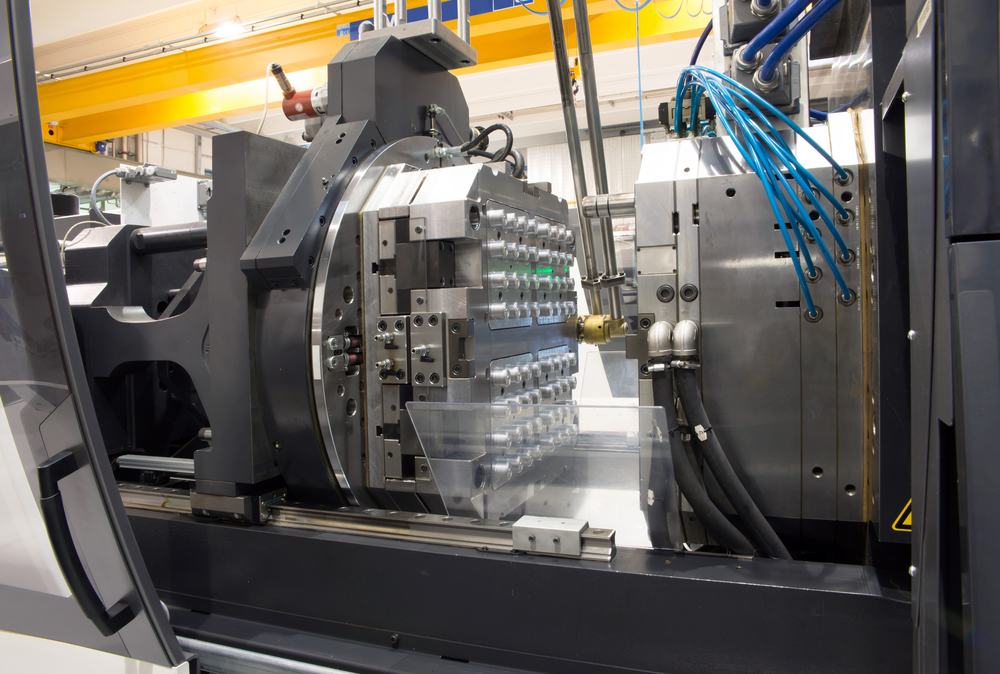
Understanding Injection Moulding: A Beginner’s Guide for Product Creators
What is Injection Moulding? Injection moulding is a manufacturing process used to produce parts by injecting molten material –[…]
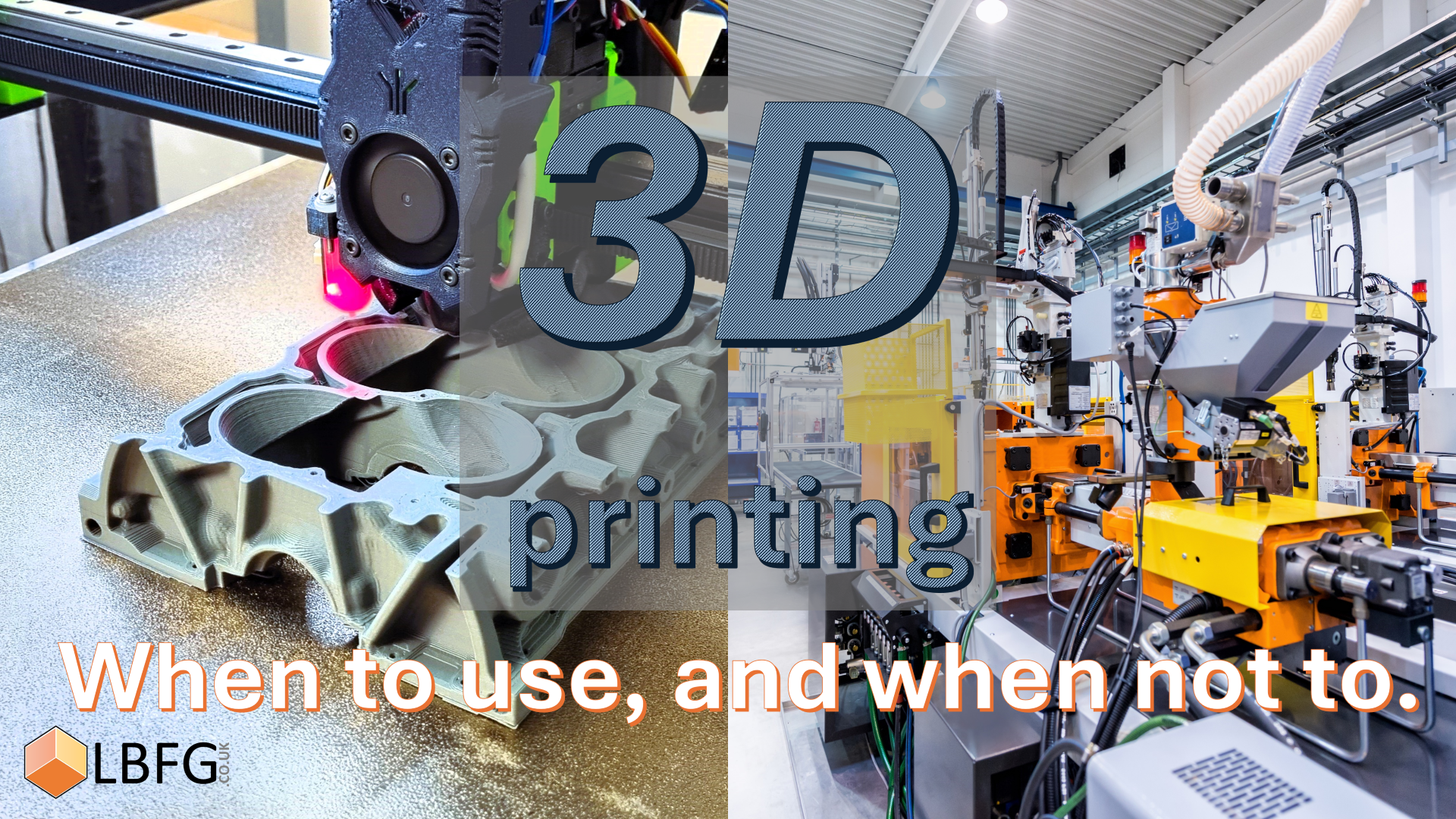
3D Printing vs Traditional Manufacturing
Exploring the pros and cons. 3D printing has become a game-changer in the world of manufacturing, prototyping, and design,[…]

Avoiding Shipping Scams: Stay Safe When Tracking Your Order
At LBFG, customer trust and security are paramount. Unfortunately, with the increase in online shopping, shipping scams have become[…]
Start your project today!
Whether you need a prototype tomorrow or a batch of parts for launch, LBFG makes it easy.
Our combination of technical expertise and in-house UK production ensures you get the parts you need, on time and on budget.
 using WordPress and