Multi Jet Fusion (MJF) is a cutting-edge additive manufacturing technology known for its exceptional speed, precision, and mechanical performance. Unlike traditional powder-based printing methods, MJF selectively applies a fusing agent onto a powdered thermoplastic material, which is then solidified layer by layer using infrared heat. This process produces highly detailed, strong, and functional parts with superior surface quality and isotropic mechanical properties, making it ideal for both prototyping and end-use production.
We provide on-demand MJF 3D printing services to businesses across the UK, delivering high-performance nylon parts with fast turnaround times. Whether you require complex geometries, production-ready components, or functional prototypes, our MJF printing service ensures consistency and reliability tailored to your needs.
We provide on-demand SLA 3D printing services to businesses across the UK, ensuring the highest quality resin prints with fast turnaround times. Whether you need to create highly detailed prototypes, manufacture complex geometries, or achieve exceptional surface finishes, our SLA printing service offers reliable and precise results tailored to your needs.
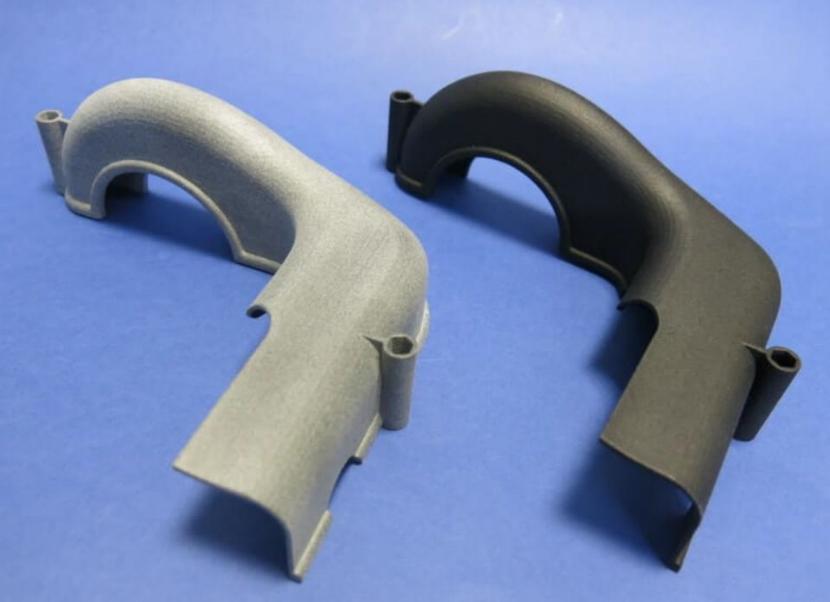
Our MJF technology supports part sizes up to 380 x 284 x 380 mm, covering a wide range of industrial applications. For larger designs, we offer seamless assembly solutions, ensuring the structural integrity and precision of multi-part assemblies.
MJF is widely used in industries such as automotive, aerospace, medical, and consumer goods due to its high-strength materials, excellent chemical resistance, and smooth surface finishes. With its rapid production speeds and cost-efficient scalability, MJF is an ideal choice for small to medium batch production and customised manufacturing.
Quality, Accuracy, and Layer Thickness
Multi Jet Fusion (MJF) is renowned for its exceptional precision, uniform strength, and fine surface finish, making it ideal for functional prototypes and production-grade parts. The process delivers consistent mechanical properties in all directions (isotropic strength), ensuring that parts maintain their integrity under stress. Thanks to high-resolution printing, MJF can produce intricate details and sharp edges while maintaining excellent dimensional accuracy across complex geometries.
Key Quality & Accuracy Data:
This makes MJF an excellent choice for prodution-ready parts, functional prototypes, and small-to-medium batch manufacturing, offering a balance of precision, strength, and cost-efficiency.
Design Guidelines for MJF Parts
To ensure high-quality output with our MJF 3D pringint process, we recommend the following design parameters:
Our engineers will review every order prior to production and will notify you if any feature is non-printable or may result in poor quality, particularly when creating complex geometries using the MJF manufacturing process.
Accepted File Formats for Additive Manufacturing
Our instant quoting system for additive manufacturing accepts STL, OBJ, and 3MF files.
For manual quotes and enquiries, we also accept and convert other file formats at no extra cost, including:
If your file format isn’t listed, please contact us using the online form. Our team is ready to support your manufacturing process every step of the way.
Material Options for MJF Printing
MJF currently offers a limited material choice—PA12—but it makes up for it with excellent mechanical properties and finish options. Parts can be smoothed, polished, dyed, or painted to suit both functional and aesthetic requirements.
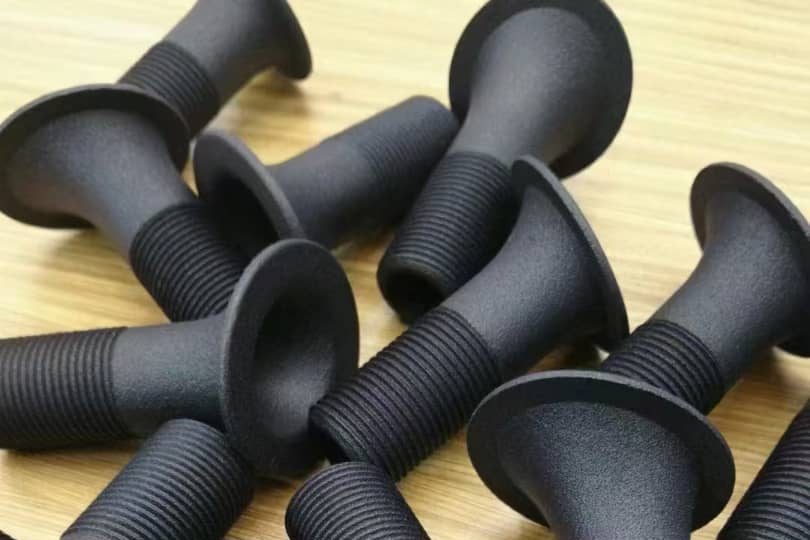
PA12 – Nylon 12 (Poly Amide 12)
PA12 (Nylon 12) is a durable, versatile thermoplastic used in MJF printing, providing excellent strength, impact resistance, flexibility, chemical resistance, and detailed, uniform surface finish—ideal for functional prototypes and robust end-use components.
Available solely in grey but can be dyed in black or painted in any colour.
Need Help Choosing the RIght Material?
Let us know your application details and specifications. Our team can recommend the best MJF 3D printing material based on the manufacturing process, mechanical performance, and suitability for complex geometries or structural features.
Contact us for expert support with MJF printers, printing technology, and achieving successful results across different materials and use cases.